Keep up with the Grand Farm Innovation Campus this growing season! Our new Weekly Email Series "What's New at the Farm" posts every Monday!
Sign up now

More room to test. More ways to collaborate. Phase II expands our North Dakota campus with new facilities and tools to move agricultural ideas from the lab to the field.
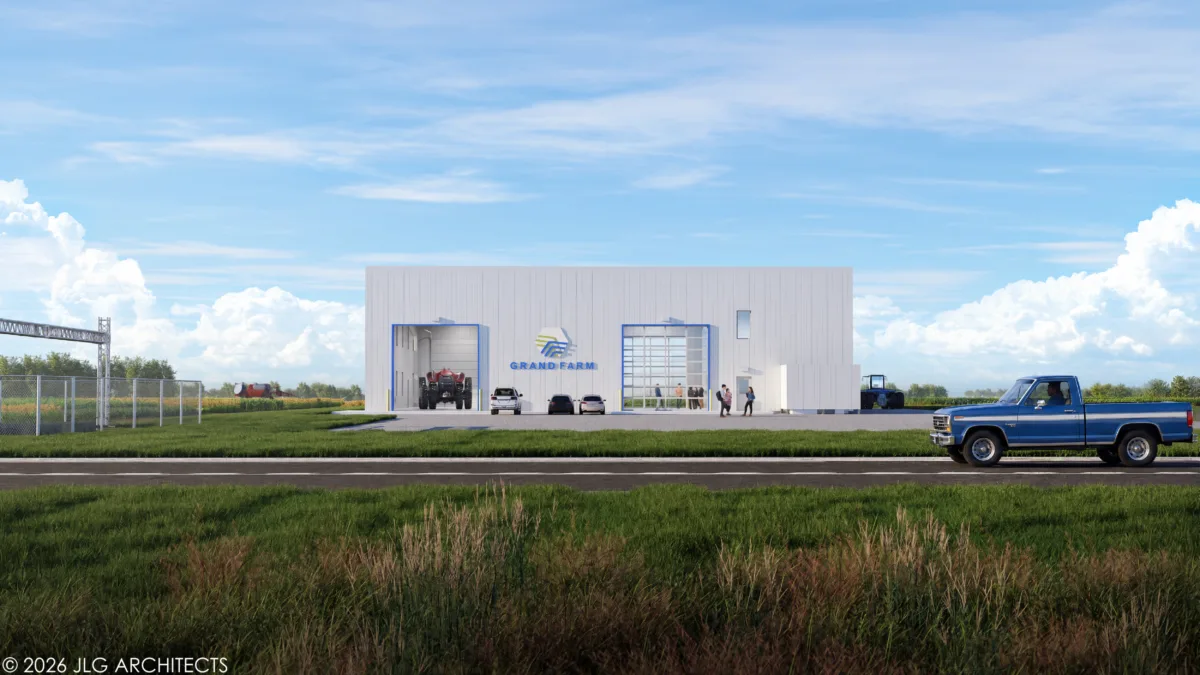
PLANNING STARTED
8,500 square feet of new space to support campus operations and testing in the field.
Made possible through the North Dakota Autonomous Agriculture Grant.
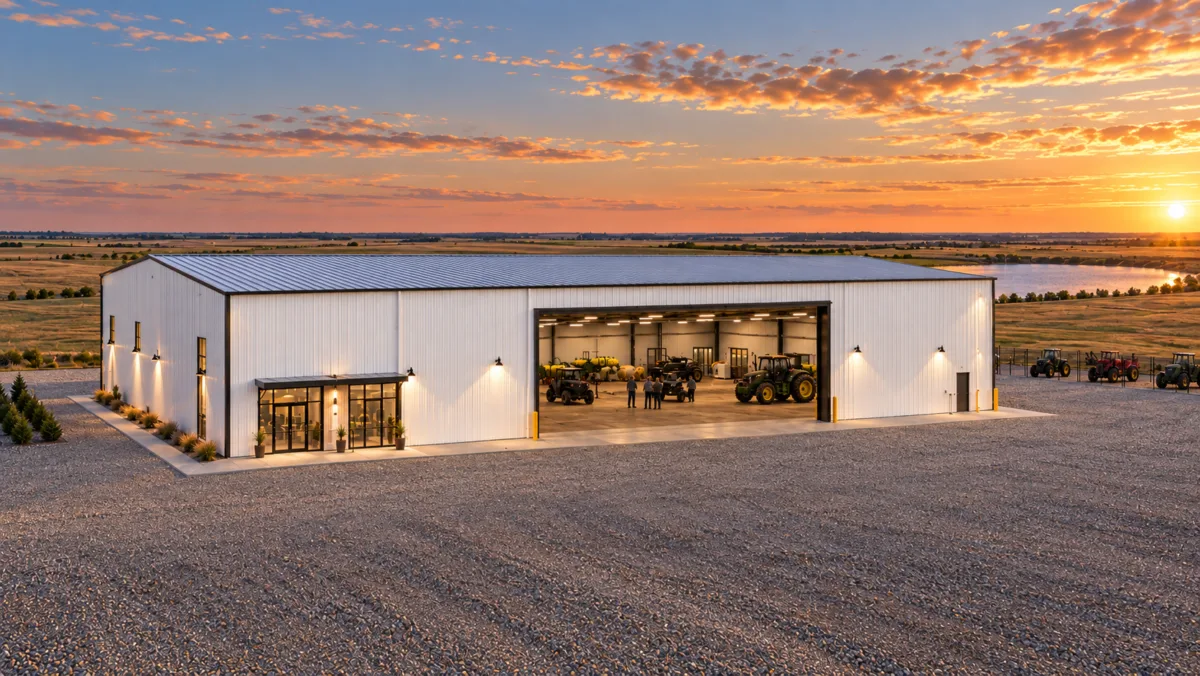
FUNDING SECURED
A year-round place to test and demonstrate agricultural technology, even when weather keeps equipment out of the field.
Supported by a $5M EDA grant and a $1.25M match from the North Dakota Autonomous Agriculture Grant.
New tools for discovery – BenchBot
As the largest BenchBot platform in the country, this machine captures plant images for agricultural research. Grand Farm also coordinates testing nationwide through the USDA National Proving Grounds Network™ for AgTech.
On the horizon – EMC Facility
A proposed Center for Electromagnetic Resilience and Autonomous Systems could help companies test and refine connected equipment.


Grand Farm partnered with Confluence and a broad coalition of partners to create the Innovation Campus Master Plan: a roadmap for growth that will shape the campus into a world-class destination for collaboration, immersive engagement, and real-world testing of agricultural technologies.
Launched in 2022, Phase 1 established the foundation of the Innovation Campus through a 140-acre land acquisition near Casselton, ND and the construction of the 25,000 sq. ft. Innovation Shop. This phase was enabled by strong public–private partnership, including $15.3 million in support from the State of North Dakota and over 50 families and organizations.
With this foundation in place, Grand Farm activated the site as a collaborative hub. The Innovation Shop has hosted research, demonstrations, and hundreds of stakeholder engagements, unlocking $235 million in federal funding tied to Grand Farm initiatives and attracting anchor industry partners to North Dakota.
The Driving Innovation Capital Campaign brings private and philanthropic support together with public investment to help build Phase II’s facilities and research capabilities.